
Virginia Court Records After Arrest
After a jail arrest in Virginia, the custody record and the court record are separate. The jail record shows booking, facility, bond, and current custody if the jail publishes those fields. The court record shows the filed charge, case number, hearing dates, court events, disposition, and sentence information if the case reaches that stage. A case may appear in court records after a person is released from jail, and a jail roster may show a person before the court portal updates.
Virginia Courts online services and OCIS 2.0 are statewide access points for case information. They should be used for charge and court-status questions. Jail roster questions, booking photos, and custody location questions should be routed through the county, city, regional jail, VADOC, BOP, ICE, or VINE system that holds the person.
Virginia Court Case Search
The statewide court sources in the research are the Virginia Courts online services page, OCIS 2.0, and the case status and information hub. These tools apply to charges, court dates, case numbers, court dispositions, traffic and criminal cases in general district courts, adult criminal case information in juvenile and domestic relations district courts, and selected circuit-court records. They do not show current jail housing.
The Virginia Courts online services page is the main starting point for court-record search tools.
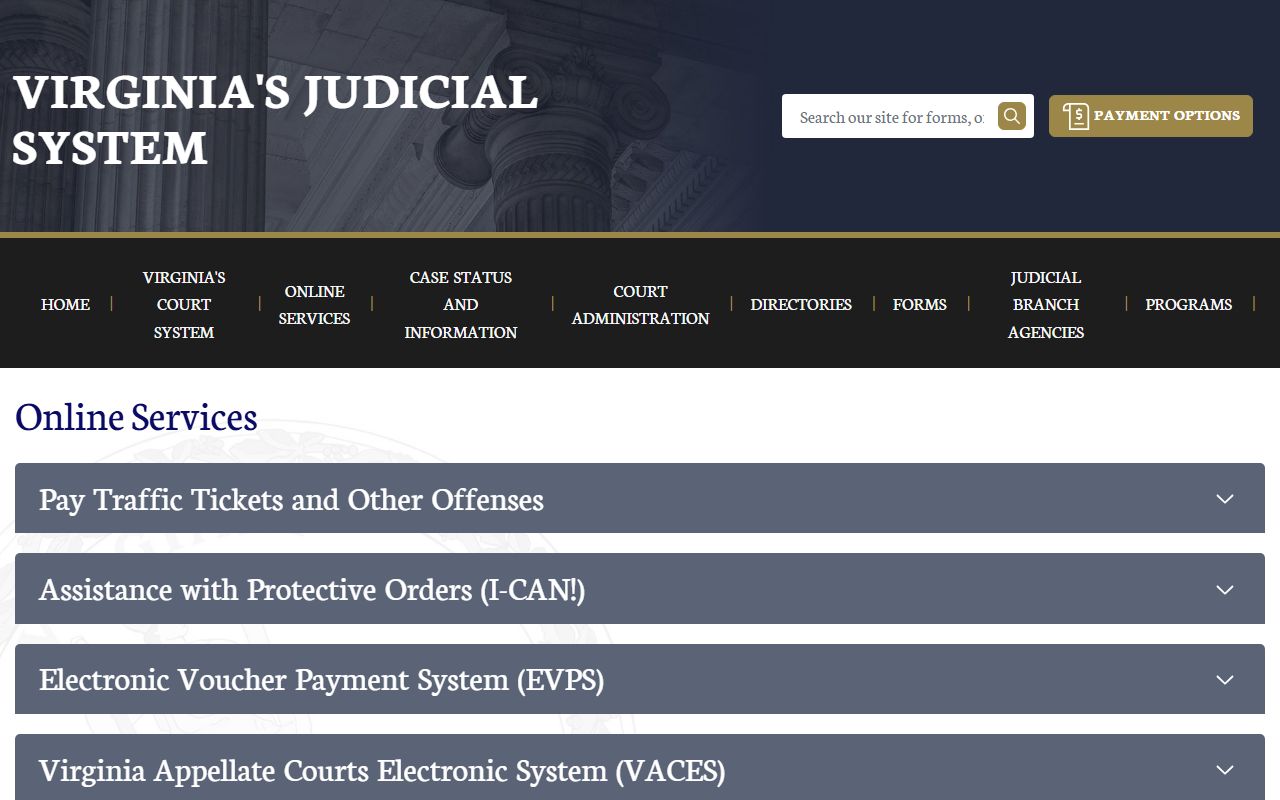
Start there when the question is about charges, hearing dates, or disposition rather than jail custody.
Search Court Records After Arrest
Search court records with enough identifiers to separate people with similar names. The arresting locality, court, approximate arrest date, and case number help narrow results. If the user only knows that the person is in custody, search the jail roster first, then use the court tools once charges appear.
- Open the Virginia court services page or OCIS 2.0.
- Search by defendant name, case number, or the court tied to the arrest.
- Open the criminal or traffic case record and review the charge list.
- Check charge status, next hearing, disposition, and sentence entries.
- Use the jail roster or VADOC locator only for current custody location.
The Virginia OCIS 2.0 landing page is a statewide case-information access point.
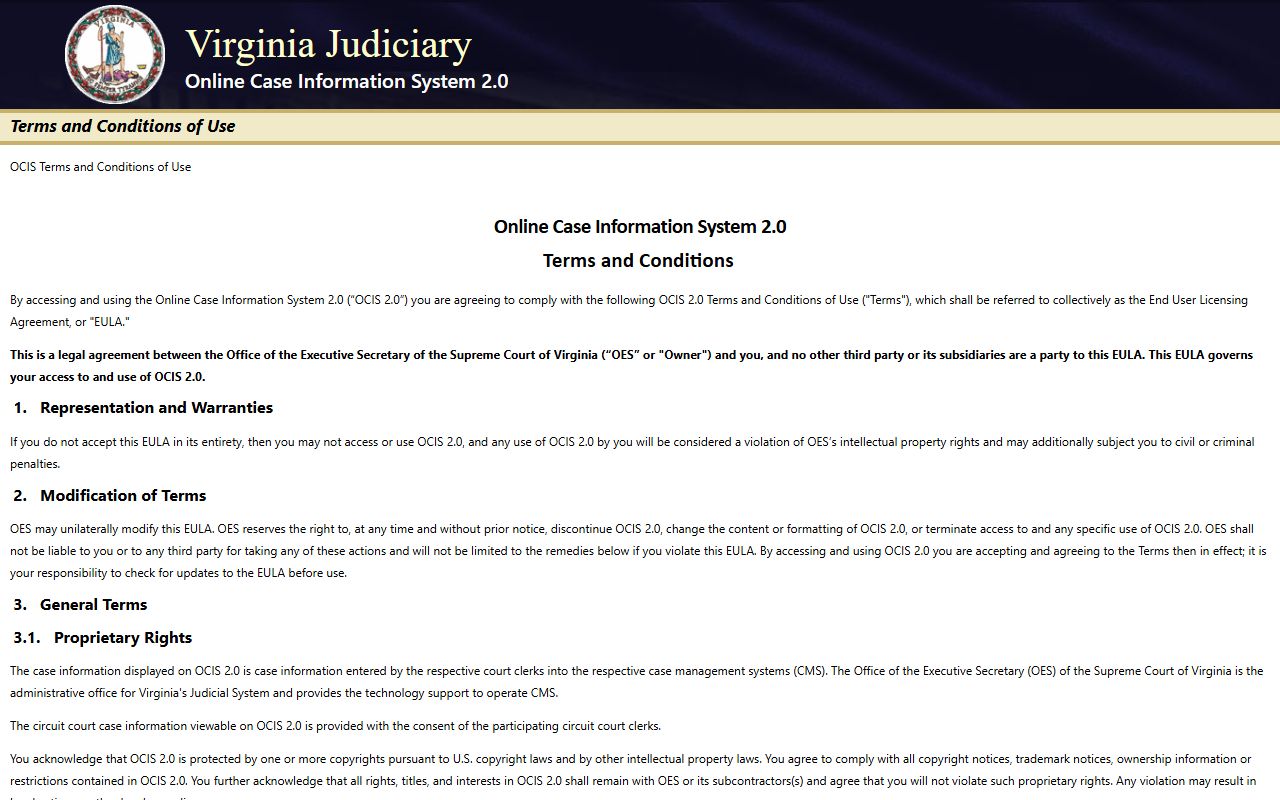
OCIS helps connect a jail arrest to the later case record, but it does not confirm current custody.
Charges After a Jail Arrest
Booking charges are not always the final court charges. An officer or magistrate may start the process, and prosecutors may amend, reduce, add, drop, or seek indictment on charges as the case develops. Court records are the better source for the official case status because they track what was filed and what the court did with it.
| Document | What it does | Where it appears |
|---|---|---|
| Complaint or warrant | Starts many criminal matters after arrest or investigation | Court and law-enforcement records |
| Information | Prosecutor-filed charging document in eligible cases | Court record |
| Indictment | Grand-jury charge for felony prosecution | Circuit court record |
Virginia Charge Status Terms
Charge status can change without changing the original jail booking entry. A roster may preserve the first charge label while the court later shows an amended statute, a reduced offense, a dismissal, or a nolle prosequi. For legal effect, read the court record and the final disposition.
| Status | Plain meaning |
|---|---|
| Pending | The charge remains open and has not reached final disposition. |
| Amended or reduced | The charge changed from the original filing or booking label. |
| Dismissed | The court disposed of the charge without conviction. |
| Nolle prosequi | The prosecutor declined to continue that charge at that time. |
| Convicted | A plea or finding resulted in conviction and sentencing. |
Jail Records vs Court Records
Jail records answer custody questions. Court records answer charge and case questions. A jail record may show bond, booking date, facility, and housing. A court record may show the charging document, hearing schedule, judge, plea, disposition, and sentence. Both can be public, but they are created by different custodians.
| Record | Shows | Does not prove |
|---|---|---|
| Jail roster | Current or recent custody and booking details | Final court outcome |
| Court case | Filed charges, hearings, dispositions | Current jail housing |
| VADOC locator | State custody or supervision | Local booking status before VADOC involvement |
The VADOC locator should be used when a court sentence has moved the person into state custody.
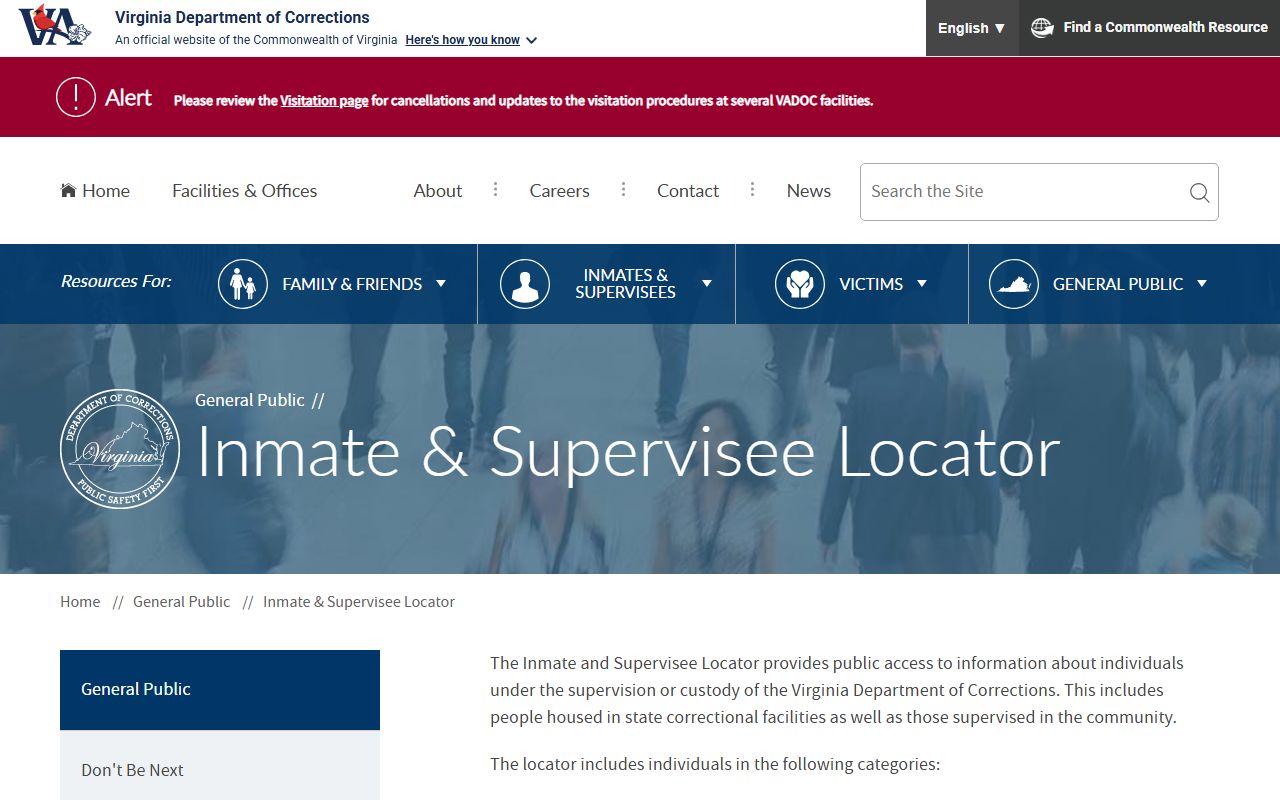
After sentencing, the custody search can shift from the jail roster to VADOC even though court records remain visible.
Charges vs Convictions
An arrest or charge is not a conviction. A charge is an accusation filed in the court process. A conviction follows a guilty plea, finding, or verdict. Virginia court records may show both pending charges and convictions, so read the disposition field carefully before treating a record as final.
| Charge | Conviction | |
|---|---|---|
| Stage | Accusation after arrest or investigation | Final result after plea, finding, or verdict |
| Record source | Case filing and docket entries | Disposition and sentencing entries |
| Use caution | Can be amended or dismissed | May still be appealed, sealed, or expunged in eligible cases |
Sealed or Restricted Records
Virginia FOIA and court-access rules include limits. Juvenile matters, sealed records, expunged matters, some dismissed records, and investigative files can be unavailable or restricted. Code of Virginia Section 2.2-3706 governs many law-enforcement records, including criminal investigative files and adult arrestee photographs. Public access depends on the record type and the custodian.
The VADOC FOIA page is relevant when the record sought is a corrections record rather than a court docket.
Send records requests to the office that maintains the record, not to a statewide search page that does not hold it.
Custody Notice After Court
Court records show case movement, but they do not push release alerts. Virginia VINE and VINELink are the better tools when the user needs notification that a covered person was released, transferred, or changed custody status. VINE can matter after a bond hearing, sentencing hearing, or transfer between a local jail and another authority.
The Virginia VINELink page supports custody notifications for covered records.

Use court records for the case and VINE for status alerts when a custody change is the concern.
Note: Public case information may lag or omit restricted details, so verify urgent legal status with the court or holding agency.
Public Record Search
Sponsored Results